Ikigai vs. Flow State: Unlocking Your Purpose and Peak Performance
Discover the connection between Ikigai and Flow. Learn how to harness both concepts to find your purpose, increase productivity, and live a more fulfilling life. Understand their differences and similarities.
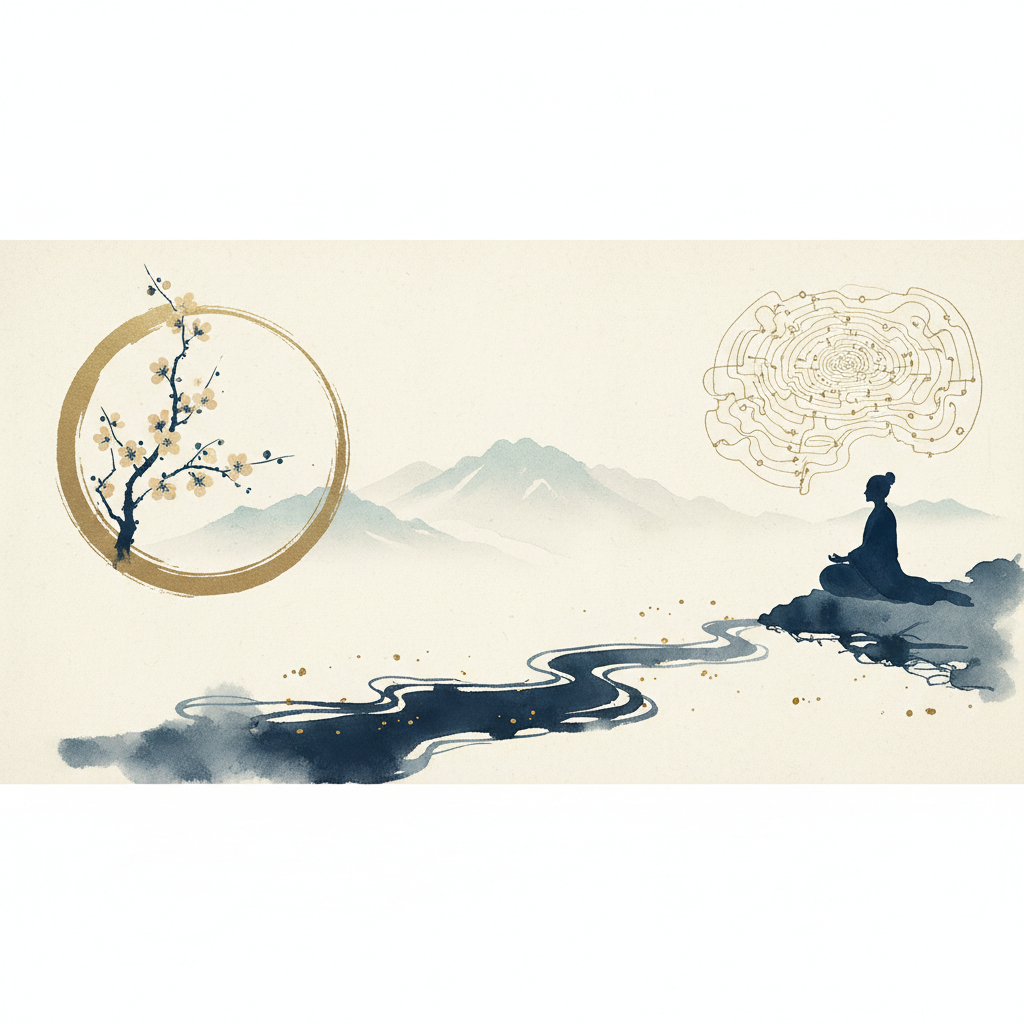
Do you ever lose track of time when you're deeply engrossed in an activity? That's likely the feeling of "flow state." While it may seem similar to Ikigai, your reason for being, flow is more about the how of achieving purpose, and Ikigai is the why. In this article, we will explore both of these powerful concepts, understand their relationship, and learn how you can use them to live a more meaningful and productive life.
Understanding Ikigai: Your Reason for Being
Ikigai (生き甲斐) is a Japanese concept that translates roughly to "a reason for being." It represents the intersection of four key elements:
- ●What you love: Your passions and interests.
- ●What you are good at: Your skills and talents.
- ●What the world needs: How you can contribute to society.
- ●What you can be paid for: Your profession or vocation.
Finding your Ikigai involves deep self-reflection and exploration. It's about identifying what truly motivates you, what you excel at, and how you can use your talents to make a positive impact on the world while also sustaining yourself financially. It’s not just about a job; it encompasses your entire life and the meaning you derive from it.
The Four Elements of Ikigai
Let's break down each of the four elements of Ikigai in more detail:
- ●What you love: This is about identifying your passions, hobbies, and interests. What activities make you feel alive and energized? What do you enjoy doing in your free time? Consider what you naturally gravitate towards and what brings you joy. For example, if you love writing, that could be a clue to explore further.
- ●What you are good at: This involves recognizing your skills, talents, and strengths. What are you naturally good at? What do people often compliment you on? Think about the things you find easy to learn and the tasks you excel at. Maybe you're a natural problem-solver or a gifted communicator.
- ●What the world needs: This is about identifying how you can contribute to society and make a positive impact on the world. What problems do you see that you want to solve? What causes are you passionate about? Consider how you can use your skills and talents to help others or make a difference in your community. Maybe you are passionate about environmentalism or helping the homeless.
- ●What you can be paid for: This involves identifying how you can sustain yourself financially while pursuing your Ikigai. What skills or talents are in demand? What professions align with your passions and values? Consider how you can monetize your skills and create a sustainable career path. For example, maybe you can get paid to write.
"Your Ikigai is at the intersection of your passion, your talent, what the world needs, and what you can be paid for."
Finding Your Ikigai: A Practical Approach
Finding your Ikigai is a journey of self-discovery. It may take time and experimentation to identify your true purpose. Here are some practical steps you can take to get started:
- ●Self-Reflection: Take time to reflect on your values, passions, skills, and experiences. Ask yourself questions like:
- ●What am I passionate about?
- ●What am I good at?
- ●What does the world need?
- ●What can I be paid for?
- ●Experimentation: Try new things and explore different interests. Take classes, volunteer, or start a side project. The more you experiment, the more likely you are to discover your hidden talents and passions.
- ●Seek Feedback: Ask friends, family, and colleagues for feedback on your strengths and weaknesses. They may see qualities in you that you don't recognize yourself.
- ●Connect the Dots: Look for patterns and connections between your passions, skills, and values. Where do these elements overlap? This is where you're likely to find your Ikigai.
- ●Embrace the Journey: Finding your Ikigai is not a destination, but a journey. Be patient with yourself and enjoy the process of self-discovery. Your Ikigai may evolve over time as you grow and change.
Understanding Flow State: The Joy of Being in the Zone
Flow state, also known as "being in the zone," is a state of deep immersion and engagement in an activity. It's characterized by a feeling of intense focus, enjoyment, and a loss of self-consciousness. When you're in flow, time seems to distort, and you're completely absorbed in the present moment.
The concept of flow state was popularized by psychologist Mihály Csíkszentmihályi, who described it as a state of optimal experience. He found that people are happiest and most productive when they are in flow.
Characteristics of Flow State
According to Csíkszentmihályi, there are several key characteristics of flow state:
- ●Clear Goals: You have a clear understanding of what you're trying to achieve.
- ●Concentration: You're able to focus your attention on the task at hand.
- ●Loss of Self-Consciousness: You're not worried about what others think of you.
- ●Distorted Sense of Time: Time seems to speed up or slow down.
- ●Immediate Feedback: You receive immediate feedback on your progress.
- ●Balance Between Challenge and Skill: The task is challenging enough to be engaging, but not so difficult that it's overwhelming.
- ●Sense of Control: You feel in control of the situation.
- ●Intrinsically Rewarding: The activity itself is enjoyable and rewarding.
"The best moments in our lives are not the passive, receptive, relaxing times… The best moments usually occur if a person’s body or mind is stretched to its limits in a voluntary effort to accomplish something difficult and worthwhile." - Mihály Csíkszentmihályi
Achieving Flow State: Practical Tips
While flow state can sometimes happen spontaneously, there are things you can do to increase your chances of experiencing it:
- ●Choose a Challenging Activity: Select an activity that stretches your skills and abilities. It should be challenging enough to be engaging, but not so difficult that it's frustrating.
- ●Set Clear Goals: Define clear goals for the activity. What are you trying to achieve? Having clear goals will help you focus your attention and track your progress.
- ●Minimize Distractions: Create a distraction-free environment. Turn off your phone, close your email, and find a quiet place to work.
- ●Focus Your Attention: Concentrate on the task at hand. Pay attention to the details and try to block out any extraneous thoughts or distractions.
- ●Seek Feedback: Look for opportunities to receive immediate feedback on your progress. This could involve tracking your performance, asking for input from others, or simply observing the results of your actions.
- ●Embrace the Process: Focus on the process of the activity, rather than the outcome. Enjoy the challenge and the feeling of being fully engaged in the present moment.
Ikigai and Flow State: A Symbiotic Relationship
While Ikigai and flow state are distinct concepts, they are closely related and can be mutually reinforcing. Finding your Ikigai can make it easier to enter flow state, and experiencing flow state can help you discover your Ikigai.
Your Ikigai provides a sense of purpose and direction, which can make it easier to focus your attention and engage in activities that are meaningful to you. When you're working on something that aligns with your Ikigai, you're more likely to be motivated and engaged, which can increase your chances of entering flow state.
Conversely, experiencing flow state can help you discover your Ikigai by providing insights into your passions, skills, and values. When you're in flow, you're operating at your peak potential, and you're more likely to uncover hidden talents and interests. Reflecting on your flow experiences can help you identify what truly motivates you and what you're naturally good at.
For example, consider a musician whose Ikigai involves using their musical talents to bring joy to others. When they're performing on stage, they may enter a state of flow, feeling completely absorbed in the music and the connection with the audience. This flow experience reinforces their Ikigai and motivates them to continue pursuing their musical passion.
"When your work aligns with your Ikigai, you're more likely to experience flow, and flow experiences can help you discover your Ikigai."
Practical Ways to Integrate Ikigai and Flow
Here are some practical ways to integrate Ikigai and flow state into your life:
- ●Identify Your Ikigai: Take the time to explore your passions, skills, values, and the needs of the world. What is your reason for being?
- ●Align Your Activities with Your Ikigai: Choose activities that align with your Ikigai. This could involve your work, hobbies, or volunteer activities.
- ●Set Clear Goals: Define clear goals for each activity. What are you trying to achieve? Having clear goals will help you focus your attention and track your progress.
- ●Create a Flow-Friendly Environment: Minimize distractions and create a space that is conducive to concentration and focus.
- ●Embrace the Challenge: Choose activities that stretch your skills and abilities. The challenge will keep you engaged and motivated.
- ●Reflect on Your Experiences: After each activity, take time to reflect on your experience. What did you learn? What did you enjoy? How can you improve next time?
By consciously integrating Ikigai and flow state into your life, you can unlock your full potential and live a more meaningful and fulfilling life. You'll find yourself more motivated, engaged, and productive, and you'll experience a greater sense of purpose and joy.
Statistics show that people who have a strong sense of purpose (Ikigai) tend to live longer and healthier lives. A study published in the journal Psychosomatic Medicine found that individuals with a higher sense of purpose had a lower risk of mortality. This highlights the importance of finding your Ikigai for your overall well-being.
Furthermore, research on flow state has shown that it can lead to increased creativity, productivity, and overall happiness. A study by the McKinsey Global Institute found that executives in flow state are five times more productive than average. This demonstrates the power of flow state for achieving peak performance.
In conclusion, both Ikigai and flow state offer valuable frameworks for living a more fulfilling and productive life. By understanding these concepts and actively integrating them into your daily routine, you can unlock your potential and experience greater joy, purpose, and success. Start by reflecting on your passions, skills, and values, and then find activities that align with your Ikigai and allow you to enter flow state. The journey towards self-discovery is a rewarding one, and the benefits of integrating Ikigai and flow are immeasurable. What steps will you take today to start living a life of purpose and flow?
Frequently Asked Questions
What if I can't find my Ikigai right away?
Finding your Ikigai is a journey, not a destination. Be patient with yourself and keep exploring your interests and passions. It may take time and experimentation to discover your true purpose. Don't be afraid to try new things and seek feedback from others.
Can I have more than one Ikigai?
Yes, it's possible to have multiple Ikigais. Your Ikigai may evolve over time as you grow and change. It's also possible to have different Ikigais for different areas of your life, such as your career, hobbies, and relationships.
How is flow state different from just being focused?
While focus is a component of flow, flow state goes beyond simple concentration. It involves a complete absorption in the activity, a loss of self-consciousness, and a distorted sense of time. Flow is a more intense and immersive experience than simply being focused.
What if the activity that aligns with my Ikigai is not challenging enough to induce flow?
You can increase the challenge by setting more ambitious goals, adding constraints, or seeking out new ways to improve your skills. The key is to find a balance between challenge and skill, so that the activity remains engaging and motivating.
Is Ikigai only relevant to work or career?
No, Ikigai encompasses all aspects of your life, not just your work or career. It's about finding meaning and purpose in everything you do, from your relationships to your hobbies to your contributions to society. While your career can be a part of your Ikigai, it's not the only component.
Join Our Community
Connect with thousands of purpose-seekers on their Ikigai journey. Get exclusive insights, weekly prompts, and support from like-minded individuals.
Written by V.S.
Founder of FindYourIkigai.co. I help people discover their reason for being through the ancient Japanese philosophy of Ikigai, blended with modern psychology and practical wisdom.
Learn more about me →Continue Reading
Ikigai in Action: How a Community Garden Cultivated Purpose
Discover how a community garden became a source of ikigai for its members. Learn how shared purpose, connection, and contribution can unlock your own reason for being.
Why You Haven't Found Your Ikigai Yet (And What to Do About It)
Discover your "reason for being" with this guide on finding your Ikigai - the sweet spot where your passions, talents, the world's needs, and financial viability intersect. Unlock a more purposeful, fulfilling life.

What Is Ikigai? The Japanese Secret to a Purposeful Life
Discover the Japanese concept of ikigai - the intersection of what you love, what you're good at, what the world needs, and what you can get paid for. Learn how embracing ikigai can help you find meaning, direction, and fulfillment in your life.