The Ikigai Venn Diagram Explained (With Examples)
Discover your purpose with the Ikigai Venn diagram. Learn how the 4 key elements - what you love, what you're good at, what the world needs, and what you can be paid for - can guide you to a fulfilling life. Explore real-world examples for inspiration.
The Ikigai Venn Diagram Explained (With Examples)
Key Takeaways
- ●Ikigai is a Japanese concept that represents the intersection of what you love, what you're good at, what the world needs, and what you can be paid for.
- ●The Ikigai Venn diagram is a visual tool that helps you discover your purpose and live a fulfilling life.
- ●Understanding the four elements of the Ikigai diagram can guide you towards finding meaningful work and a sense of purpose.
- ●Exploring real-world examples of Ikigai can inspire you to discover your own unique Ikigai.
What is Ikigai?
Ikigai is a Japanese concept that represents the intersection of four key elements: what you love, what you're good at, what the world needs, and what you can be paid for. It's often described as the "reason for being" - the thing that gets you out of bed in the morning and makes you feel fulfilled.
The word "Ikigai" is a combination of two Japanese words: "Iki" meaning "life" and "Gai" meaning "reason" or "purpose." So, in essence, Ikigai is your personal reason for living, your sense of purpose, and the thing that makes your life worthwhile.
Discovering your Ikigai can have a profound impact on your life. When you align your passions, skills, and values with the needs of the world and the ability to be financially sustainable, you unlock a deep sense of meaning and satisfaction. This can lead to improved mental and physical well-being, increased motivation and productivity, and a greater sense of fulfillment in your work and personal life.
The Ikigai Venn Diagram
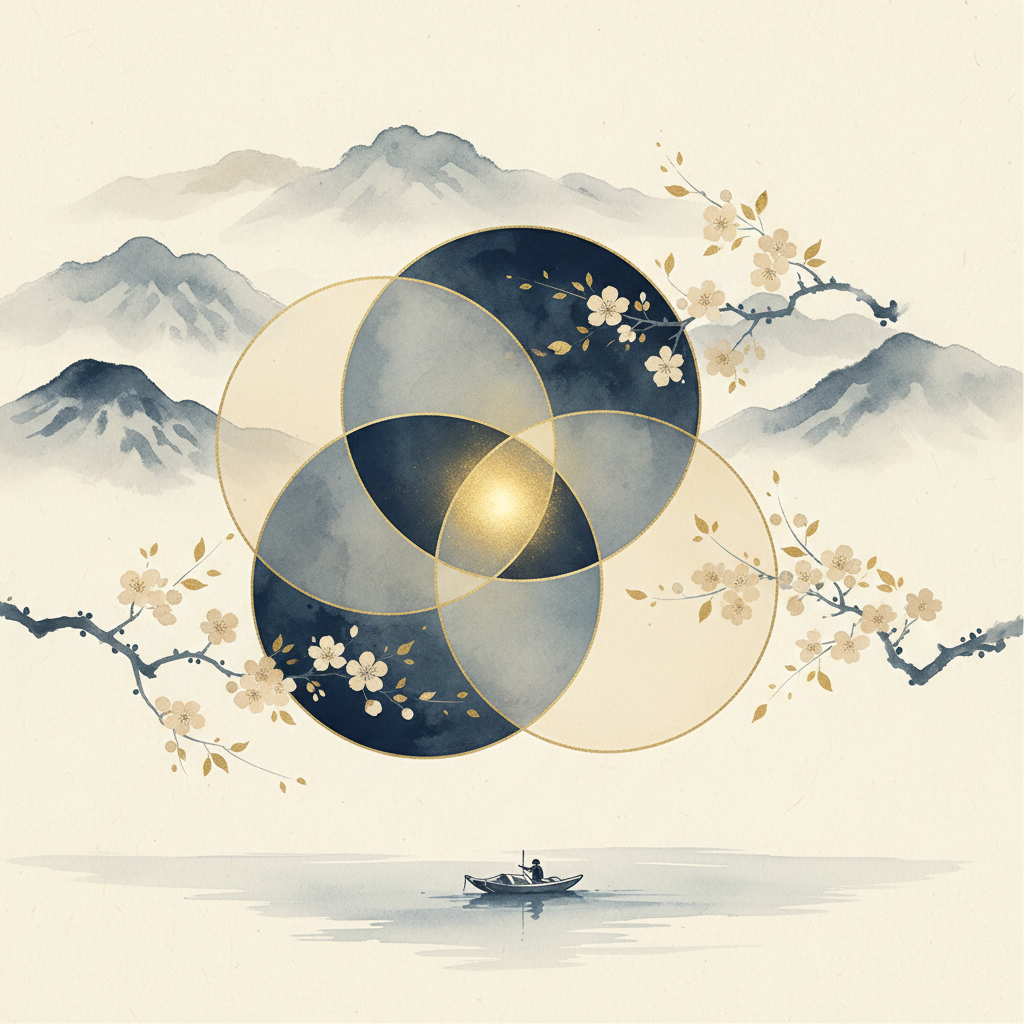
The Ikigai Venn diagram is a visual representation of the four key elements that make up your Ikigai. It's a powerful tool that can help you discover your purpose and find work that is truly meaningful to you.
The Ikigai Venn diagram consists of four overlapping circles, each representing one of the four elements:
- ●What you love (Passion): This is the thing that you're passionate about, the activities that bring you joy and fulfillment.
- ●What you're good at (Profession): These are the skills, talents, and abilities that you've developed over time, the things you excel at.
- ●What the world needs (Mission): This is the need or problem that you can help solve, the way you can contribute to the greater good.
- ●What you can be paid for (Vocation): This is the practical, financial aspect of your Ikigai - the work that can provide you with a sustainable income.
The sweet spot where all four of these elements intersect is your Ikigai - the unique purpose and meaning that you can bring to the world.
Exploring the Four Elements of Ikigai
Let's dive deeper into each of the four elements of the Ikigai Venn diagram and how they can help you discover your purpose.
What You Love (Passion)
Your passions are the activities, hobbies, and interests that bring you joy and fulfillment. They're the things you love to do, the things that make you lose track of time and energize you.
To uncover your passions, ask yourself questions like:
- ●What activities do I enjoy the most?
- ●What do I find myself naturally drawn to?
- ●What topics or subjects fascinate me?
- ●When do I feel most alive and engaged?
Explore your childhood memories, your current interests, and the things that make you feel excited and inspired. These are the clues that can lead you to your passions.
What You're Good At (Profession)
Your professional skills and talents are the things you excel at, the abilities that come naturally to you and that you've honed over time.
To identify your strengths, consider:
- ●What tasks or activities do you find easy and enjoyable?
- ●What do others often compliment you on or ask for your help with?
- ●What skills have you developed through your education, work, or hobbies?
- ●What are you consistently praised for?
Recognizing your unique talents and abilities can help you understand the value you can bring to the world.
What the World Needs (Mission)
The world's needs are the problems, challenges, or opportunities that exist in your community, your industry, or the global landscape. These are the areas where you can make a positive impact and contribute to the greater good.
To identify the world's needs, reflect on questions like:
- ●What issues or causes are important to me?
- ●What problems do I see that need to be solved?
- ●How can I use my skills and passions to make a difference?
- ●What unmet needs or gaps exist in my community or industry?
By aligning your skills and passions with the world's needs, you can find a sense of purpose and meaning in your work.
What You Can Be Paid For (Vocation)
Your vocation is the practical, financial aspect of your Ikigai. It's the work that can provide you with a sustainable income and allow you to support yourself and your lifestyle.
To determine what you can be paid for, consider:
- ●What skills or services are in demand in the job market?
- ●What are people or organizations willing to pay for?
- ●How can I monetize my passions and talents?
- ●What are the current trends and opportunities in my industry or field?
Finding the intersection between your skills, the world's needs, and the ability to be financially sustainable is crucial for creating a fulfilling and sustainable career.
Real-World Examples of Ikigai
Understanding the concept of Ikigai is one thing, but seeing it in action can be even more inspiring. Let's explore a few real-world examples of individuals who have discovered their Ikigai:
Example 1: The Organic Farmer
Yuki is a passionate organic farmer who loves working with the land and growing healthy, sustainable produce. She's always been skilled at gardening and has a deep understanding of sustainable farming practices. Yuki's mission is to provide her local community with fresh, nutritious food while promoting environmentally-friendly agriculture. She's able to earn a living by selling her organic produce at the local farmer's market and through a community-supported agriculture (CSA) program.
Yuki's Ikigai:
- ●What she loves: Gardening and sustainable farming
- ●What she's good at: Organic farming and horticulture
- ●What the world needs: Healthy, locally-sourced food and sustainable agriculture
- ●What she can be paid for: Selling organic produce
Example 2: The Children's Book Author
Alex has always had a passion for storytelling and a deep empathy for children. She's honed her writing skills over the years and has a natural talent for creating engaging, imaginative tales. Alex's mission is to inspire and educate children through her books, helping them navigate the challenges of growing up. She's able to earn a living by publishing and selling her children's books, which are in high demand in her local community and online.
Alex's Ikigai:
- ●What she loves: Writing stories and connecting with children
- ●What she's good at: Creative writing and children's literature
- ●What the world needs: Engaging, educational children's books
- ●What she can be paid for: Publishing and selling children's books
Example 3: The Social Entrepreneur
Mei is a social entrepreneur who is passionate about empowering marginalized communities. She has a background in social work and community development, and she's skilled at identifying and addressing the unique needs of underserved populations. Mei's mission is to create sustainable solutions that improve the lives of those in need. She's able to earn a living by running a social enterprise that provides job training, education, and support services to her local community.
Mei's Ikigai:
- ●What she loves: Helping others and creating positive social change
- ●What she's good at: Community development and social work
- ●What the world needs: Sustainable solutions for marginalized communities
- ●What she can be paid for: Running a successful social enterprise
These examples illustrate how the Ikigai Venn diagram can be applied in real-life scenarios, helping individuals discover their unique purpose and create fulfilling, sustainable careers.
Discovering Your Own Ikigai
Now that you have a deeper understanding of the Ikigai Venn diagram and its four key elements, it's time to start exploring your own Ikigai.
Begin by reflecting on the questions we discussed for each element:
- ●What do you love and are passionate about?
- ●What are you good at and excel in?
- ●What needs or problems can you help solve in the world?
- ●What can you be paid for and earn a sustainable living from?
As you explore these questions, look for the intersection points where your passions, skills, the world's needs, and financial viability overlap. This is the sweet spot where your Ikigai lies.
Remember, discovering your Ikigai is a journey, not a destination. It may take time and experimentation to uncover your true purpose. Be patient, stay curious, and don't be afraid to try new things.
"Your Ikigai is at the intersection of what you are good at and what you love doing." - Japanese proverb
By aligning your passions, skills, and values with the needs of the world and your ability to be financially sustainable, you can unlock a deep sense of meaning and fulfillment in your life.
Conclusion
The Ikigai Venn diagram is a powerful tool that can help you discover your unique purpose and create a life of meaning and satisfaction. By understanding the four key elements of Ikigai - what you love, what you're good at, what the world needs, and what you can be paid for - you can embark on a journey of self-discovery and find work that truly fulfills you.
Exploring real-world examples of Ikigai can inspire you to uncover your own purpose and live a life of purpose and passion. Remember, your Ikigai is not a fixed destination, but rather a constantly evolving process of self-reflection and growth.
Embrace the journey, stay curious, and trust that the answers you seek are already within you. By aligning your passions, skills, and values with the needs of the world, you can unlock a deep sense of meaning and fulfillment in your life.
Frequently Asked Questions
What is Ikigai?
Ikigai is a Japanese concept representing the intersection of what you love, what you're good at, what the world needs, and what you can be paid for. It's often described as your "reason for being" and what makes your life feel worthwhile.
How do I find my Ikigai?
You can find your Ikigai by exploring the four key elements: what you love, what you're good at, what the world needs, and what you can be paid for. The Ikigai Venn diagram is a useful tool to visually represent and understand the intersection of these elements, guiding you toward your purpose.
What are the benefits of finding your Ikigai?
Discovering your Ikigai can lead to a deep sense of meaning and satisfaction in life. This alignment of passion, skills, values, and financial sustainability can improve mental and physical well-being, increase motivation and productivity, and foster a greater sense of fulfillment.
What if I'm not good at anything?
Everyone possesses unique skills and talents, even if they're not immediately apparent. Focus on exploring your interests and passions, and identify areas where you naturally excel or enjoy learning. These can be developed into valuable skills that contribute to your Ikigai.
Can my Ikigai change over time?
Yes, your Ikigai can evolve as you grow, learn, and experience new things. It's important to regularly reflect on your passions, skills, and values to ensure they remain aligned with your current life stage and circumstances. Be open to adapting your Ikigai as needed to maintain a sense of purpose and fulfillment.
Join Our Community
Connect with thousands of purpose-seekers on their Ikigai journey. Get exclusive insights, weekly prompts, and support from like-minded individuals.
Written by V.S.
Founder of FindYourIkigai.co. I help people discover their reason for being through the ancient Japanese philosophy of Ikigai, blended with modern psychology and practical wisdom.
Learn more about me →Continue Reading
Ikigai in Action: How a Community Garden Cultivated Purpose
Discover how a community garden became a source of ikigai for its members. Learn how shared purpose, connection, and contribution can unlock your own reason for being.
Why You Haven't Found Your Ikigai Yet (And What to Do About It)
Discover your "reason for being" with this guide on finding your Ikigai - the sweet spot where your passions, talents, the world's needs, and financial viability intersect. Unlock a more purposeful, fulfilling life.

What Is Ikigai? The Japanese Secret to a Purposeful Life
Discover the Japanese concept of ikigai - the intersection of what you love, what you're good at, what the world needs, and what you can get paid for. Learn how embracing ikigai can help you find meaning, direction, and fulfillment in your life.